
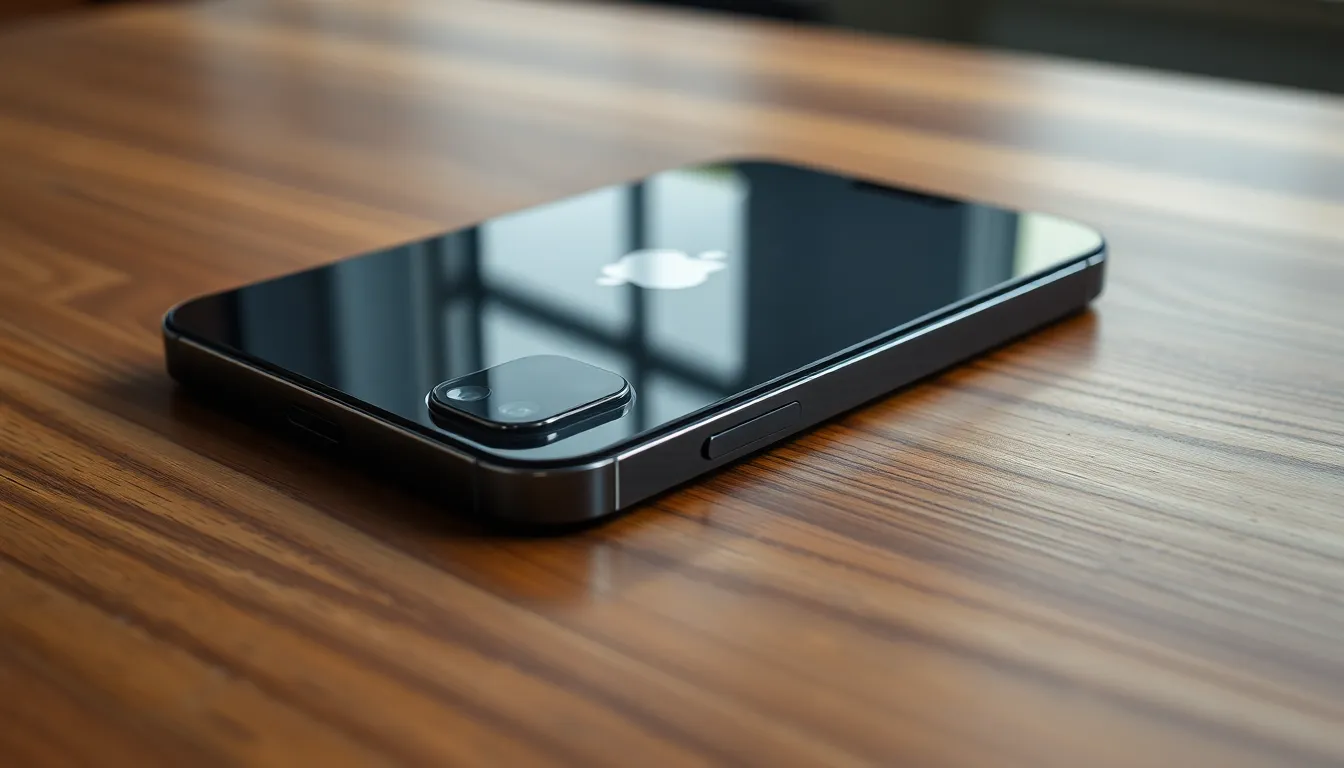
In the fast-paced world of smartphones, the iPhone 11 Pro Max stands tall, but there’s a burning question: is it 5G ready or just a fancy 4G paperweight? With the rollout of 5G networks, everyone’s buzzing about faster speeds and smoother streaming. Yet, here sits the iPhone 11 Pro Max, looking sleek and powerful, but can it keep up with the 5G hype?
Overview of iPhone 11 Pro Max
The iPhone 11 Pro Max showcases advanced technology despite lacking 5G capabilities. It combines performance and elegance to meet user expectations.
Key Features
Camera systems lead the features of the iPhone 11 Pro Max. It includes a triple-lens setup, with 12MP wide, ultra-wide, and telephoto options. The device supports advanced computational photography through Smart HDR and Night mode. Performance impresses with the A13 Bionic chip, facilitating smooth multitasking and gaming experiences. Battery life stands out, offering up to 20 hours of talk time. Storage options vary, providing choices of 64GB, 256GB, or 512GB, catering to different user needs.
Design and Build Quality
The iPhone 11 Pro Max presents an elegant design with a premium glass and stainless steel construction. Display measures 6.5 inches, utilizing Super Retina XDR technology for vibrant colors and deep blacks. It features a textured matte glass back, adding to its premium feel. Dust and water resistance rated at IP68 enhances durability for everyday use. Color variations include Space Gray, Silver, and Midnight Green, appealing to diverse preferences. The overall design emphasizes both aesthetics and functionality, ensuring a comfortable user experience.
5G Technology Explained
5G technology represents the next generation of wireless connectivity, promising faster speeds, lower latency, and improved capacity. This advancement in telecommunications is pivotal as networks evolve to accommodate growing data demands.
What Is 5G?
5G stands for fifth generation and refers to the latest wireless communication technology. It provides enhanced mobile broadband, enabling devices to transmit and receive data at significantly higher speeds. Speeds can reach up to 10 Gbps, far surpassing 4G LTE capabilities. The technology incorporates a combination of improved radio frequencies and advanced antenna systems, which optimize network performance. Key components of 5G include millimeter waves, small cell technology, and massive MIMO (multiple input, multiple output) systems.
Benefits of 5G Connectivity
5G connectivity offers numerous advantages over previous generations. Enhanced speed results in quicker downloads, making activities like streaming, gaming, and video conferencing more seamless. Reduced latency, often below 10 milliseconds, allows real-time communications, which is crucial for applications like autonomous vehicles and remote surgeries. Increased network capacity supports more connected devices simultaneously, benefiting smart homes and Internet of Things (IoT) devices. Furthermore, improved reliability ensures consistent performance in high-demand scenarios, enhancing user satisfaction across various applications.
iPhone 11 Pro Max: 5G Compatibility
The iPhone 11 Pro Max lacks compatibility with 5G networks, positioning it as a high-end 4G smartphone. Users expect advanced features, but hardware limitations restrict its ability to leverage 5G technology.
Hardware Limitations
Limited to 4G LTE, the iPhone 11 Pro Max’s hardware cannot access the higher speeds offered by 5G networks. The device features an A13 Bionic chip, ensuring excellent performance, yet this chip does not support the additional requirements of 5G connectivity. High-end specs like a triple-lens camera and a Super Retina XDR display enhance user experience, but none address the critical need for 5G. As 5G technology relies on new components, the absence of these elements means users miss out on the advantages of faster download speeds and lower latency.
Software Considerations
Software aspects also play a role in 5G compatibility. The iOS version on the iPhone 11 Pro Max optimizes existing features for 4G, without the necessary updates for 5G support. While the device benefits from regular software updates improving performance, these updates can’t enable a 5G experience. Developers design applications with 5G in mind, but users of the iPhone 11 Pro Max won’t gain access to these enhanced features. Upgrading to a device with 5G capabilities becomes essential for users wanting to fully realize the potential of next-generation connectivity.
User Experience with 5G
User experience with 5G can significantly enhance smartphone capabilities, but the iPhone 11 Pro Max doesn’t support it. Users seeking faster connections, lower latency, and improved network reliability may find the lack of 5G compatibility limiting.
Speed and Performance
Speed and performance become critical factors in modern smartphones. 5G networks offer potential download speeds that reach up to 10 Gbps, far outperforming 4G LTE. Users experience quicker access to content and smoother streaming with this new technology. Meanwhile, the iPhone 11 Pro Max, despite its powerful A13 Bionic chip, cannot tap into these speeds. Performance remains impressive for 4G tasks, but it falls short of the capabilities 5G could provide for data-intensive applications. Users wanting rapid data transfers, especially in busy areas, may find their experience lacking.
Real-World Usage Scenarios
Real-world usage scenarios illustrate the practical impact of 5G on daily activities. With 5G, activities like video conferencing or cloud gaming occur with minimal lag, leading to seamless interactions. Enhanced capabilities enable more users to connect simultaneously without sacrificing performance. The iPhone 11 Pro Max, while excellent for standard uses, does not optimize these advanced functions due to its 4G limitation. Users engaged in high-demand tasks may notice significant differences when compared to devices equipped with 5G. As 5G becomes mainstream, those using the iPhone 11 Pro Max might find themselves at a disadvantage in high-speed environments.
The iPhone 11 Pro Max remains a powerful device with impressive features but lacks 5G compatibility. As 5G technology continues to evolve and become more widespread, users may find themselves limited by the phone’s 4G capabilities. While it excels in areas like photography and performance, the absence of 5G support means it won’t fully harness the benefits of faster speeds and reduced latency. For those who prioritize cutting-edge connectivity and the latest advancements in mobile technology, considering a 5G-capable device might be the best choice moving forward.


